


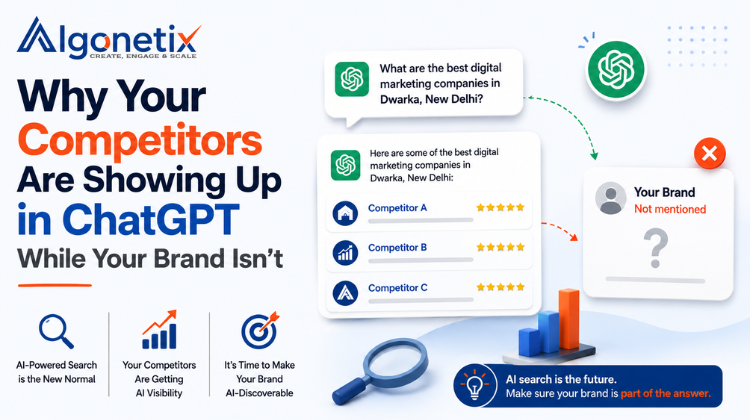
Google Search is not the same anymore.
In 2026, users are getting answers directly on Google without opening multiple websites.
This is happening because of Google AI Overviews.
These AI-generated summaries now appear at the top of many search results and provide quick answers collected from different websites.
For businesses, bloggers, and every SEO Company in Delhi, this change is significant.
Earlier, ranking on page one was enough to drive traffic. Now, even websites ranking in the top 3 positions may receive fewer clicks if Google already answers the query within AI Overviews.
SEO is not dead. It is evolving.
Businesses now need content that works for both traditional search engines and AI-generated search experiences.
This is where Generative Engine Optimization (GEO) becomes important.
What You Will Learn in This Blog
- What Google AI Overviews are
- How AI Overviews affect SEO
- What businesses should do in 2026
- Why GEO is becoming essential in modern SEO
What Are Google AI Overviews?
Google AI Overviews are AI-generated summaries displayed at the top of search results.
They gather information from multiple websites and provide users with quick answers.
For example, if someone searches:
“How to improve local SEO for small business”
Google may instantly show:
- Key SEO tips
- Step-by-step guidance
- FAQs
- Suggested strategies
- Source links
All of this appears before traditional organic results.
This changes how users interact with search engines.
Instead of visiting multiple websites, users may simply read the AI summary and leave.
That is why businesses offering SEO Services in Delhi are now focusing on content that AI systems can easily understand and trust.
Traditional SEO vs SEO in the AI Overview Era
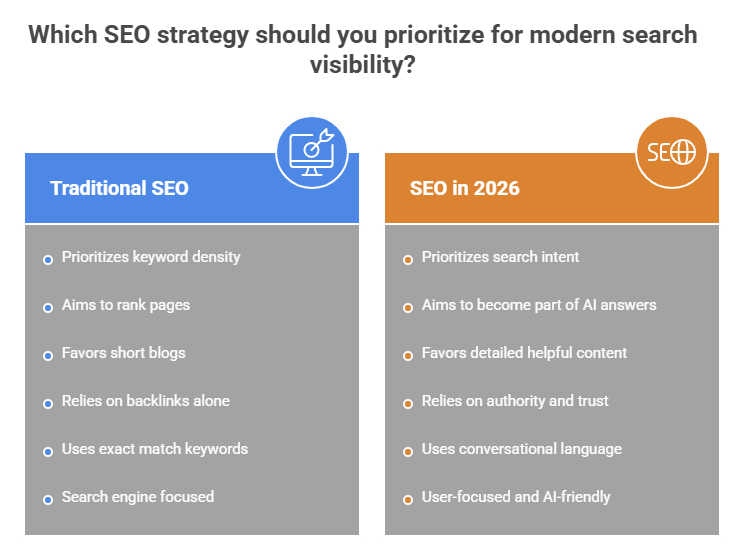
The SEO landscape in 2026 looks very different from previous years.
| Traditional SEO | SEO in 2026 |
|---|---|
| Focus on keyword density | Focus on search intent |
| Rank pages | Become part of AI answers |
| Short blogs worked | Detailed helpful content works |
| Backlinks alone mattered most | Authority + trust matter |
| Exact match keywords | Conversational language |
| Search engine focused | User-focused and AI-friendly |
SEO still matters, but modern content must answer questions naturally, clearly, and helpfully.
Why AI Overviews Are Changing SEO
The biggest reason is changing user behavior.
People now expect:
- Faster answers
- Direct information
- Simple explanations
- Less searching
Google wants to keep users inside its ecosystem longer.
This affects:
- Organic traffic
- Click-through rates
- Content strategy
- Keyword targeting
What Is Generative Engine Optimization (GEO)?
Generative Engine Optimization (GEO) is the process of optimizing content for AI-generated search results.
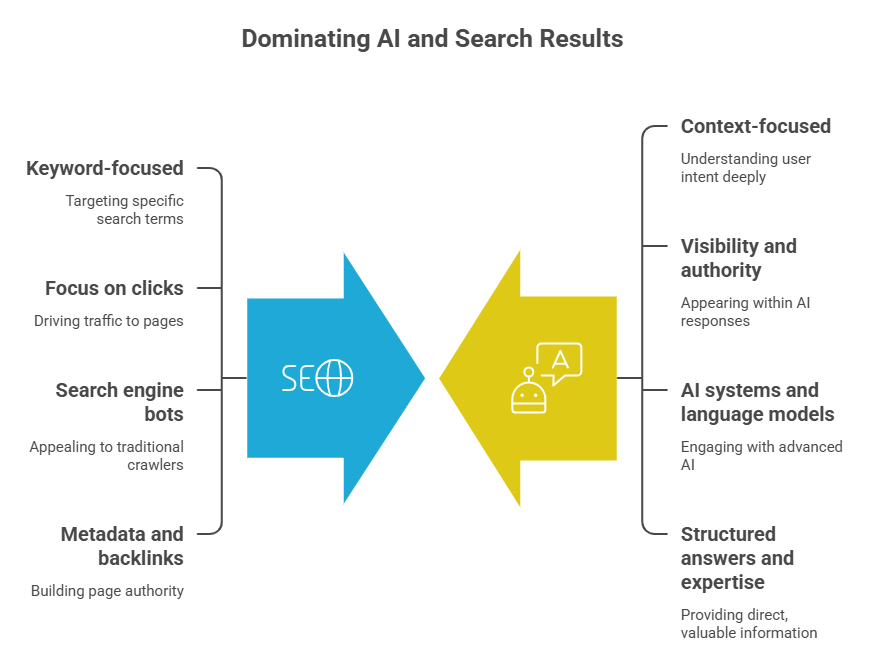
Traditional SEO helps pages rank.
GEO helps content appear inside AI-generated answers.
| Search Engine Optimization (SEO) | Generative Engine Optimization (GEO) |
|---|---|
| Optimizes for search rankings | Optimizes for AI-generated answers |
| Keyword-focused | Context-focused |
| Focus on clicks | Focus on visibility and authority |
| Search engine bots | AI systems and language models |
| Metadata and backlinks | Structured answers and expertise |
How Google Chooses Content for AI Overviews
Google’s AI systems prefer content that is:
- Easy to read
- Helpful
- Trustworthy
- Well-structured
- Updated regularly
- Written by real experts
Search Intent Matters More Than Keywords
Earlier, many websites ranked by repeating keywords multiple times.
That strategy no longer works effectively.
Google AI now understands:
- Meaning
- User intent
- Context
- Conversational language
Long-Tail Keywords Are Growing Fast
People now search the way they naturally speak.
This is why long-tail keywords are becoming increasingly valuable.
Businesses offering SEO Services in Delhi should focus on:
- Question-based keywords
- Conversational searches
- Problem-solving topics
- Detailed blog content
Content Structure Is More Important Than Ever
AI systems process content differently from humans.
Well-structured blogs perform better because AI can easily understand them.
Good Content Structure Includes:
- Clear headings
- Short paragraphs
- Bullet points
- FAQ sections
- Tables
- Lists
- Step-by-step guidance
Content Types That Work Best in 2026
| Content Type | Why It Works |
|---|---|
| How-to guides | Provides direct answers |
| FAQ pages | Matches conversational searches |
| Case studies | Builds trust |
| Comparison articles | Supports decision-making |
| Expert insights | Shows authority |
| Local SEO blogs | Strong search demand |
The Future of Search
Search is becoming:
- More conversational
- More AI-driven
- More personalized
- Faster and smarter
Voice search, AI assistants, and visual search will continue to grow.
The future of SEO is not about tricking algorithms.
It is about creating content that genuinely helps users.
That is what Google wants.
And that is what AI systems reward.
Previous Post
How Google AI Overviews Are Changing SEO in 2026
Related Posts

The Ultimate Guide to Craft the Best Digital Marketing Strategies
A lot of businesses are rising, and the competition is getting tough. Already everything has…
Who Needs Digital Marketing Services?
Digital marketing has become a fundamental part of any modern business. Whether you want to…
Digital Marketing Trends of 2022 & How They Benefit Your Business
It’s often said that every New Year holds new opportunities and so does digital marketing.…

Things to Look for in a Digital Marketing Agency
Over half of the world’s population is on the internet, which makes it a stupendous…